How UiPath Agentic Automation & AI Agents Are Transforming SAP ERP

SAP ERP has long been the backbone of enterprise operations, managing finance, supply chain, procurement, manufacturing, and human resources. Traditionally, automation around SAP relies on rule-based RPA and rigid workflows. With the emergence of UiPath Agentic Automation and AI Agents, SAP ERP is undergoing a major transformation—becoming more intelligent, adaptive, and business-driven.
1. From Rule-Based Automation to Agentic Automation
Earlier SAP automations:
- Depending on fixed rules and structured data—required frequent maintenance when SAP screens or logic changed
- Could not handle exceptions or ambiguous scenarios well
UiPath Agentic Automation introduces:
- AI-powered agents that can reason, decide, and act
- Context-aware execution instead of rigid scripts
- Continuous learning from business outcomes
This shift allows SAP processes to move from task automation to decision automation.
2. What Are AI Agents in the SAP Context?
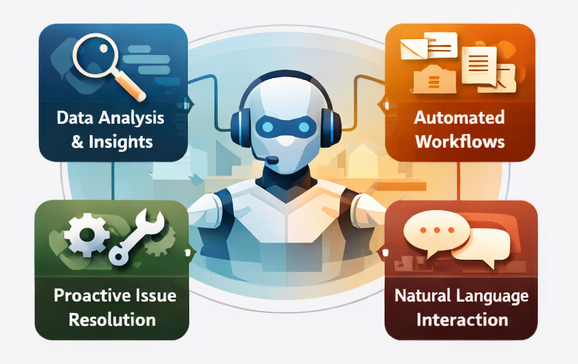
AI agents are autonomous or semi-autonomous entities that:
- Understand business intent
- Interact with SAP systems (S/4HANA, ECC, Fiori)
- Collaborate with humans and other agents
- Make informed decisions using data, rules, and AI models
In UiPath, AI Agents combine:
- Generative AI (LLMs)
- Business rules
- SAP integration (BAPI, API, UI, events)
- Orchestration and governance
3. Key SAP Areas Impacted by Agentic Automation
a) Finance & Accounting
- Intelligent invoice processing with exception handling
- Autonomous reconciliation and journal posting
- AI-driven financial close with anomaly detection
b) Procure-to-Pay (P2P)
- Agents validating vendor invoices against PO, GR, and contracts
- Automatic resolution of mismatches
- Supplier communication handled by conversational agents
c) Order-to-Cash (O2C)
- AI agents validating sales orders
- Credit checks and pricing decisions in real time
- Automated dispute resolution
d) Master Data Management
- AI agents detecting duplicates and inconsistencies
- Automated approvals with risk scoring
- Continuous data quality monitoring
4. Event-Driven SAP Automation
With SAP events (IDocs, APIs, and BTP events), UiPath agents can:
- React instantly to business events
- Trigger automations without human intervention
- Coordinate multiple SAP and non-SAP systems
This enables near real-time enterprise operations.
5. Human-in-the-Loop with SAP
UiPath Agentic Automation does not remove humans—it augments them:
- Agents escalate only complex or high-risk decisions
- Business users interact via chat, forms, or email
- SAP users focus on value-driven work, not transactions
6. Governance, Security, and Compliance
UiPath ensures enterprise-grade control:
- Role-based access aligned with SAP authorizations
- Full audit trails for compliance
- Centralized monitoring via Orchestrator
This is critical for regulated SAP environments.
7. Business Benefits
The Organizations adopting agentic automation with SAP see:
- Faster process execution
- Reduced manual effort and errors
- Higher process resilience
- Better business decisions powered by AI
8. Future of SAP with Agentic Automation
The future SAP ERP landscape will include:
- Self-healing processes
- Autonomous finance and supply chain operation
- AI agents collaborating across departments
- ERP evolving from a system of record to a system of intelligence
Conclusion:
UiPath Agentic Automation and AI Agents are redefining how enterprises use SAP ERP. By combining AI, automation, and orchestration, organizations can move beyond traditional RPA and unlock true intelligent enterprise operations. The result is a smarter, faster, and more adaptive SAP ecosystem.